:max_bytes(150000):strip_icc()/tom-bergeron-051525-5215a10075bc42e2ba491cce3be18936.jpg)
As a teenager, your passion for broadcasting and your love for The Three Stooges led you to interview Larry Fine and Moe Howard themselves. How did you manage to track them down at such a young age?
Well, as I remember it, it was a Saturday night. My parents and my sister were out somewhere, so I had the house all to myself—and I had no social life (laughs). I had a little cassette tape recorder with a little suction-cup microphone attached to the receiver of the phone. I knew that two of the original Three Stooges were still alive at that time. Now, we're talking 1971 or '72. I was in Massachusetts, so I called information in California, all the way across the country, and asked for the numbers for Larry Fine and Moe Howard. Not really expecting I'd get anything, but I thought, "What the hell?" Then I got a number for a Larry Fine.
Was that the right number?
I called, and a woman answered and said, "Oh, you know what? I know who you're trying to reach. We get these calls every so often. My son is a different Larry Fine, but we know where he is. He's at the Motion Picture and Television Home, recuperating from a stroke." So she gave me the phone number. I called there, and Larry came on the phone. Even though he had had a stroke, you could still distinctly hear that Larry voice. After talking with him for a few minutes, he gave me Moe's home phone number. So I ended up talking with both of them that night, and subsequently about half a dozen times over the next 18 months, until each of them passed away within a few months of each other.
Considering they didn't know who you were initially, were they friendly or reserved?
They were so wonderfully generous and gracious with their time. Once they knew I was a real fan, that I knew their work, and that I had questions about the process and how they did it, they were into talking with me. So, yeah, it was wonderful. Those were my first celebrity interviews when I was, like, 16 years old.
Since you later shared that material during a special with Howard Stern, did you still have those original recordings handy, or did you have to dig them up?
Well, when I was on Howard's radio show promoting a book I wrote, he asked me if I knew where the tapes were. At that point, back in 2009, I hadn't even looked for them. He was the one who encouraged me to look for the material. I ended up finding about 20 minutes of a conversation with Larry and then about a half hour of a much better-quality conversation with Moe. We transferred all of that from quarter-inch tape to digital and turned it into a special on SiriusXM called The Three Stooges: Lost and Found. My interviews were sort of the basis for it, but they also included some of the sketches they'd done over the years about the Stooges, like Larry at Woodstock and things like that.
From 1998 to 2004, you took over as host of the legendary game show Hollywood Squares, following in the footsteps of past hosts like Peter Marshall and John Davidson. What was your relationship like with Whoopi Goldberg, especially given her unique dual role as both an executive producer and the permanent center square?
Well, we hit it off right away. She was a guest on a short-lived daytime show I did on the Fox Network in the late '90s. So when the Hollywood Squares opportunity came around, Whoopi and I kind of picked up where we left off. We're good friends to this day. I did The View eight or nine months ago, and we don't see each other a lot, but when we do, it's like we saw each other yesterday. As for the rest of the celebrities, most of them changed from week to week. We had some regulars: Whoopi, of course; Bruce Vilanch, who was also a writer; Gilbert Gottfried, who was kind of my favorite; and Caroline Rhea. Those were pretty much the core group.
Following the 2001-2002 season, the show saw major shake-ups, with central figures leaving their roles and the showrunners being let go. What was the transition like into that new era, with Henry Winkler coming on board as an executive producer?
Well, Henry and his partner, Michael Levitt, took the show's reins. I had enjoyed the show in its first incarnation, but Henry and Michael are fans of television history to a degree that I think the previous regime wasn't. So we did a lot of theme weeks that brought back familiar faces from TV shows, sometimes from decades earlier. One of my favorites was when we brought back the original host of Hollywood Squares, Peter Marshall, and he took the center square. But I had requested that there be at least one show where we swapped, where he once again became the host and I went into the center square.
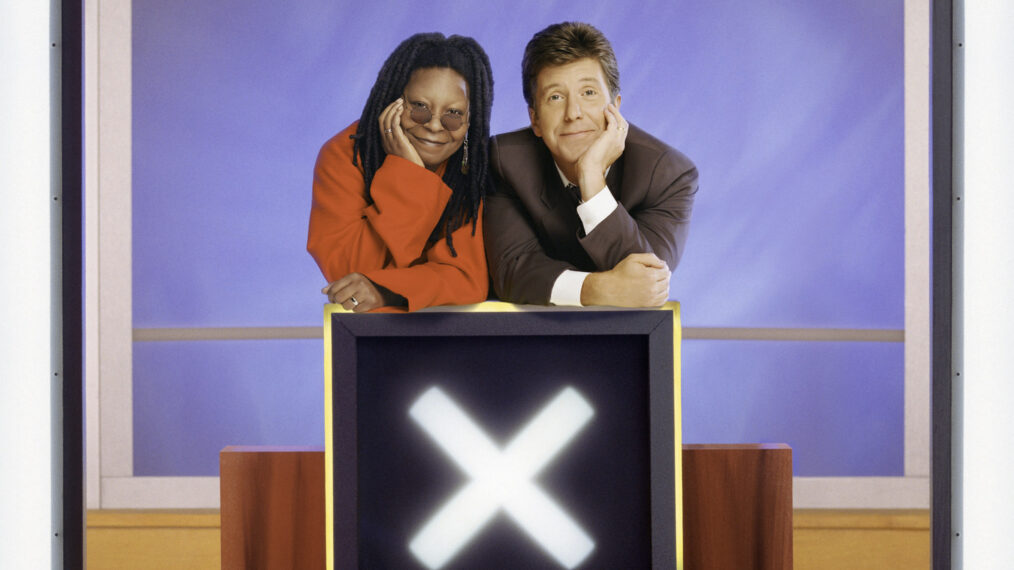
What did that feel like?
I have to tell you, Guido, when I was sitting in the center square, watching Peter host again after not having hosted for probably 20 years, it was like I was back in my childhood home in Massachusetts, watching the show like I used to. Then Peter and I became good friends in subsequent years. As a matter of fact, I hosted the memorial service for him after he passed away.
And at what point did you realize that the writing was on the wall for the show's eventual cancellation?
You know, I keep an eye on ratings, and I knew that by, I think, the end of the fifth season, the ratings were going in the wrong direction (laughs). So we were starting to lose some of the real prime clearances, like the 7:30 slot, and they were moving us to afternoons or overnight. So the writing was kind of on the wall. That's usually how you know: when the ratings start to slip.
From 2001 to 2015, you hosted America's Funniest Home Videos. How did you manage to differentiate your hosting style and put your own spin on the show, especially when stepping into a role originally defined by Bob Saget?
Oh, Bob—again, another person who became a really good friend over the years. We talked about the different ways that we did it. Bob—sadly, we don't have him with us anymore—was a stand-up comic. And I have been a broadcaster. So where Bob would try to be as funny as the videos, I treated my relationship with the videos more as a comedy team, where I was the straight man. And so I'd get a joke in here and there and certainly would ad-lib a lot of stuff, but I wasn't as focused on always getting a quip in.
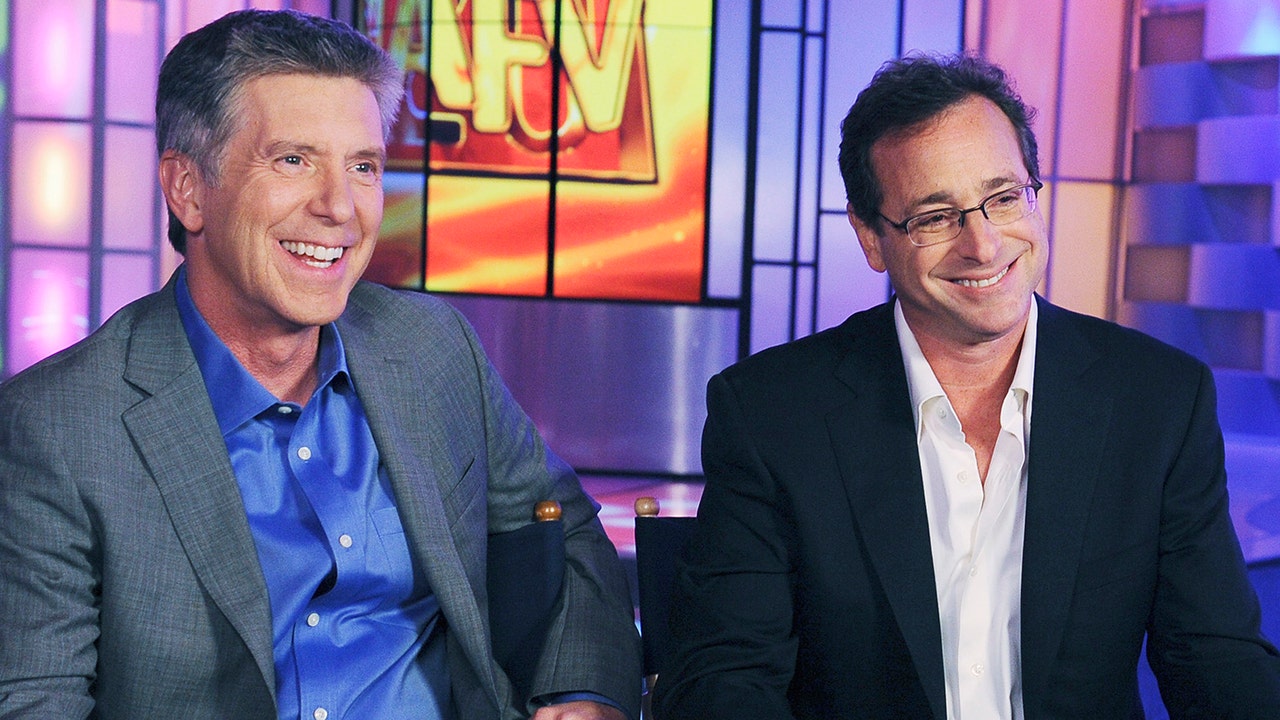
Did that different way of approaching the work change how production was handled?
Oh, yes. An example of how that difference impacted the production: my version of the show was an hour long because I like to work live. The producer was wonderfully helpful. We would do a one-hour show in about an hour and 10 minutes. And we had to stop down to explain the voting to the audience, so we could have done it in an hour if we didn't have to do that. Bob's version was a half-hour, but because he always wanted to get jokes in and would stop and psychoanalyze it, it took four hours to do it. It took four hours to do a half-hour show (laughs).
Since you mentioned talking about it after becoming friends, what did he think of his own method compared to yours?
When we became friends years later, he told me, "You know, if I was going to do it again, I'd do it the way you do it, because you're in and out, you're not competing against the videos; at best, you're enhancing them." The thing is, that's the title of the show. It's not The Tom Bergeron Show; it's America's Funniest Home Videos. That's why I say I thought of myself as the straight man, mostly.
Back in 2005, you signed on to host Dancing with the Stars, a show you would go on to anchor for years. What made you accept the offer, considering that even the original British format, Strictly Come Dancing, was still brand new at the time?
Yeah, and it was exclusive to Britain, so a version of it had not aired in the United States. ABC secured the rights from the BBC. But, to be honest, I was on hiatus from doing America's Funniest Home Videos. We were between seasons, and we knew we were coming back in the fall. Meanwhile, this new show was going to do a six-week season in the summer, when I had the time off anyway. I wasn't convinced that a celebrity ballroom competition was going to be successful, but I thought, "It's live TV, it's something different, what the hell?" And I don't think any of us predicted that it would have quite the—if you'll pardon the dancing pun—legs that it ultimately has (laughs).
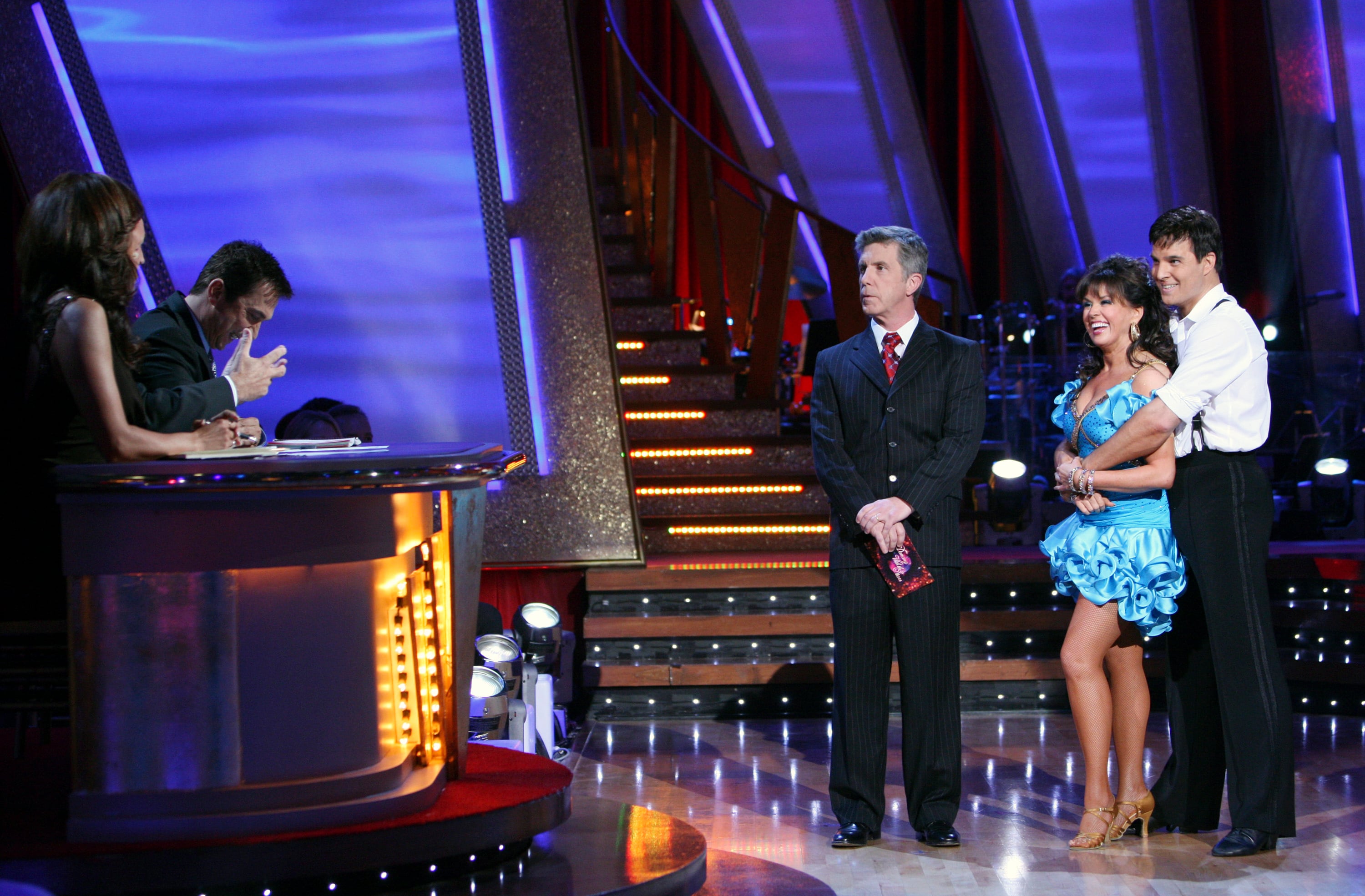
Looking back at your entire tenure on the show, what is the one story or anecdote that stands out the most to you, whether because it was incredibly funny, touching, or just bizarre?
Well, we ran the gamut of emotions like that. You know, there were some wonderfully moving dances, like when Laila Ali danced for her dad, Muhammad Ali. And at that point, he was pretty much immobilized by Parkinson's disease, which ultimately contributed to his death. But he was there, with the sparkle in his eyes, watching his daughter dance for him. That was really sweet. Then, one situation that people remind me of often was when Marie Osmond passed out after dancing. She came over to me to get the judges' scores, and all of a sudden, on live television, she went down like a sack of potatoes.
How did you handle that situation?
I threw to a commercial, and we had the paramedics come in. And she gave me the best line to come back on the air with because, when she came around, she blinked and locked eyes with me first. I think she realized what had happened, and she said, "Oh, crap" (laughs). So that gave me the perfect line to welcome the viewers back because, as far as the viewers knew, she might've just dropped dead. There was no way of knowing how serious it was. So I said, "Oh, she's fine. She's backstage. And she said, ‘Oh, crap.'" That got a big laugh. Then we cut to her, and she was a little embarrassed. She hadn't eaten, and she was doing a samba but got a little too excited; her blood sugar went wacky, and down she went.
Dozens of celebrities crossed paths with you during your 28 seasons hosting the show. You've mentioned before that you would have loved to see your close friend William Shatner compete back then. Is there any other star who comes to mind who you think either would have shined on the dance floor or just made for great television with you on air?
I had dinner with Shatner a while back, and I posted a picture on my Instagram page of the two of us from that encounter. I'm 71, but whenever I have dinner with Bill, I feel like I'm the oldest one at the table because he has such a young spirit. And just to look at him, you would think he was my peer. But he's 95; he drove himself to the restaurant and has about five or six different projects going at any given time. So I would have loved to have seen him be a contestant. Another friend who just turned 100 years old in December is Dick Van Dyke. When we were first starting, 20 years ago, I would have loved to have seen Dick, in his early 80s, dance on the show. But yeah, people like that, whom I grew up watching on television when I was coming of age.

On the flip side, given the sheer number of stars who passed through the ballroom, was there anyone you didn't quite click with on a personal or creative level?
Well, I had an enviable position because I didn't have to deal with them all week, right? If there were personalities—and I won't name names, but there certainly were—who were difficult, a lot of work, you know, had to be pampered, that was really what drove their professional partners crazy. But by the time they were next to me on live TV, they knew they probably shouldn't pull that with Tom because I'll call them out on live television. So they always behaved pretty well for me, but there were definitely personalities who gave some of our pros migraines (laughs).
In 2020, to everyone's surprise, you were released from your contract as host after 15 years at the helm. What were the real reasons behind your departure, and what led you to mention years later that you felt betrayed by the executive producers?
Yeah, there was a showrunner brought on probably a year and a half prior to that incident. And it was clear to me from the start that he did not have a real grasp of what made the show work. And at that point, we had gone from doing two seasons a year to one season a year. So from November of 2018, when we wrapped up Season 27, we weren't going to be on the air again until September of 2019. So this showrunner and his boss at the BBC each wanted to have lunch with me separately to talk about what we should focus on in the coming season.
What did you discuss with them during those lunches?
Well, here in the United States, by the end of 2019, we were getting into a presidential election year. And as I'm sure you're aware, politics are pretty divisive in our country right now, and they were then as well. And I said, "Look, the only thing I would suggest is, let's not book any politicians of any political party. Let's make our show a two-hour respite from all of the nonsense that goes on the rest of the week." They both agreed with me heartily. And then they turned around and booked a political figure on the show. It was a very controversial booking. It went against exactly what they had agreed not to do during our lunches. And I felt that that was a betrayal.
:max_bytes(150000):strip_icc()/147635_6920-2000-64ae763c4140428aaecbaa3a005a9156.jpg)
Were you able to separate yourself from that controversy?
I went public with saying, "Hey, look. This caught me by surprise, too. They're the producers. They have the right to do that if they want. But we're going to have to agree to disagree on this." As a result of that, when my option came up for the next season, they had just signed me to a three-year extension. So that was year one of the three years. But before year two, they said, "Now we're going in a different direction." I kind of suspected that might happen. And, not surprisingly, that showrunner almost tanked the show.
How so?
I mean, the ratings went down, they knocked it off ABC for a season, and then they fired him. After that, they brought back my original showrunner, the guy that I started doing the show with in 2005. So when he invited me back for the 20th anniversary show last November, it was a lovely experience, and I went back and rekindled a lot of friendships.
As you just mentioned, last year, you returned as a guest judge to celebrate the show's 20th anniversary. What did it feel like to step back into a space that you were such a massive part of for so long?
It was remarkable—it really was. And again, had the showrunner that I locked horns with been still there, I never would have gone back. But I did because my friend Conrad Green had come back on board and had really brought the show back to life, and Alfonso Ribeiro and Julianne Hough were there, and her brother Derek, Carrie Ann Inaba, and Bruno Tonioli—all people that I'm very, very fond of. And a lot of the production staff, too. So when I went the day before the actual live show, we had a rehearsal of the opening number and all that. And, Guido, it was like I'd never left. I just felt completely at home again.

Do you have any specific anecdote from that moment?
Alfonso and I did a TikTok video, goofing on the fact that he has my dressing room now, and I was in there meditating like I used to do between the dress rehearsal and the live show. And he walks in, and I go, "Oh, Alfonso. You know, I'm just getting back to my old routine—meditating in my dressing room." And he goes, "Well, wait a minute, it's my dressing room now." And I stood up and I said, "I'm so sorry, but that does explain why it took so long to pick the lock" (laughs). Yeah, it was a great time.
Considering he was your successor on America's Funniest Home Videos and has now stepped into your former shoes on Dancing with the Stars, what are your thoughts on Alfonso Ribeiro's work as a host?
You know, when I decided to leave America's Funniest Home Videos, I went to ABC and suggested Alfonso take over. And of course, he had just won a season of Dancing with the Stars as a contestant around that time, so it was a natural progression. And then when they fired the showrunner I had issues with on Dancing with the Stars and tried to get the show back on track, the person who was hosting at that time, Tyra Banks, they thought she needed a little help, so they brought in Alfonso, and I couldn't have been happier for him. We have a running joke that he's waiting for me to get my next big gig, so he'll know what he's doing next (laughs).
Didn't he also present you with the Sam Rubin Award?
Yes, I received the award from the Critics Choice Association, and Alfonso presented it to me. This was about two years ago, and I said to the audience, "You know, a lot of people don't understand, but in return for Alfonso hosting America's Funniest Home Videos and Dancing with the Stars, I get to do The Fresh Prince of Bel Air reunion" (laughs).
:max_bytes(150000):strip_icc()/bobby-bones-tom-bergeron-112325-2251e7c17e894ba0be5a7bf634049a30.jpg)
Last year, you also had a bit of a back-and-forth with Bobby Bones regarding his win from a few years back. Could you clear the air about what exactly happened there?
Yeah, I was doing an interview leading up to being a guest judge, and somebody asked me what the most shocking dismissal was, and I honestly couldn't think of one. And I said, "Well, you know, there was a win that kind of surprised me, and that was when Bobby Bones won, because there were other couples that people thought had a lock on it." Well, Bobby got his feelings hurt when I said that, and he said he had just had some sort of surgery the day before, so he was still coming out of the medication (laughs). He said he might have overreacted, but he sent his trophy back to ABC, and I felt terrible about that.
How did you two manage to patch things up?
I did his Netflix podcast, and we kind of cleared the air. I said, "Look, I can't apologize for saying I was surprised, because I was surprised." And I had a screenshot of Bobby's face, so I added, "And this is your expression when I announced your name, and you were surprised too. What I do feel bad or sorry about is that it hurt your feelings for whatever reason, and that certainly was never my intent." So we completely patched it up.
In 2008, you co-hosted the 60th Primetime Emmy Awards alongside Heidi Klum, Howie Mandel, Jeff Probst, and Ryan Seacrest. TV Guide named it one of the "25 Biggest TV Blunders" of all time. Looking back, what do you think went wrong with the preparation and execution behind the scenes?
Well, there are a few people I'd like to execute because of that (laughs). It was a bad idea from the start. It was the first year that reality hosts were nominated for Emmys. And the Emmys happened to be on ABC that year, because it goes from one network to the other. So I got a call from ABC saying, "We've got this great idea that all of you reality hosts should host the Emmys." And I thought, I don't think that's a great idea, because these are all friends of mine, but we have very different styles. And, more to the point, at that time, there were a number of people in the acting community who were not very fond of how much real estate reality shows were taking from the primetime schedule.

How did you approach such a challenging task?
Well, the producer that they had that year gave us virtually nothing to work with. Howie Mandel and the others attempted to put together something, but it was just horrible (laughs). The only good thing about it, Guido, was that I was writing a book at that time, where I had career anecdotes in it—it's called I'm Hosting as Fast as I Can—but really, the book was almost a covert book about meditation, which is all about staying present in the present moment of your life. So there I was on the stage of the Emmys on a Sunday night, knowing how badly it was going in front of millions of people. And I knew that I had to shake it off, because the very next night I had to host the season premiere of Dancing with the Stars.
Did meditation help you get through those stressful days, between the Emmys and Dancing with the Stars?
You know, let's put it this way: however bad Sunday was going to go, I knew I had to shake it off by Monday. And that gave me an ending for the book, because there was no better way to prove how beneficial it can be to build that mental muscle to be in the present moment than to wipe the egg off your face from Sunday and face another camera on Monday (laughs).
Looking back at the last few years, how has life been treating you both personally and professionally?
It's a wonderful question. I'm at a point right now where I regard myself as pretty much semi-retired. I don't have a real fire in my gut to host any more TV shows. I was so fortunate to have a 15-year run on two network primetime shows simultaneously, along with Hollywood Squares, everything I did on FX and in the Boston market for years. So my career has been wonderfully rewarding and has given me, at this stage in my life, the freedom to kind of sit back, smell the roses a bit, and also do things that intrigue me, that come along, that might be a little different.

What are those projects that are different from your previous work?
For example, I did the audiobook for Dick Van Dyke's latest book. On June 20th, I was at the Disney Concert Hall narrating Aaron Copland's Lincoln Portrait, this wonderful orchestral piece which includes the words of Abraham Lincoln, which, given the current political climate, have even more poignancy than they ever had. We had been rehearsing with the full orchestra. And that's the kind of thing that appeals to me now—it is something that's just different and engages different parts of my brain, if you will. But I have no real desire to get back to the regular grind of a show, nor do I need to anymore. There are younger people coming up like you; you can do it (laughs).
Well, along those lines, is there a bucket list goal you're still aiming to check off?
I've never been big about a bucket list, insofar as the only real item on my bucket list is to make sure I'm not wasting my time. That, you know, I treat every day as a real gift. The relationships I have with my friends and my family are so special to me. And the ability to have the time and the resources to nurture those even more, I think that's where the checklist is on my bucket list.
If there's one piece of advice or a final takeaway you'd love to leave my audience and readers with, what would it be?
Well, I think, first of all, if you're passionate about something, you're ahead of the gang, because passion is an amazingly productive fuel, but you hold that with your own personality. Don't try to be somebody else. Somebody asked me once, "Did you feel pressure following Bob Saget on America's Funniest Home Videos or Peter Marshall on Hollywood Squares?" And I said, "No, because I knew I was just going to be me. I was going to bring whatever talents or perspective I have, and I certainly wasn't going to try to ape them or be a carbon copy of them." Make sure it's your personality that you're putting through your profession, because if you try to be somebody else, they already did that. You're only going to be second best. But you can be the best you, because nobody else can do you better than you.